


HOW IT WORKS
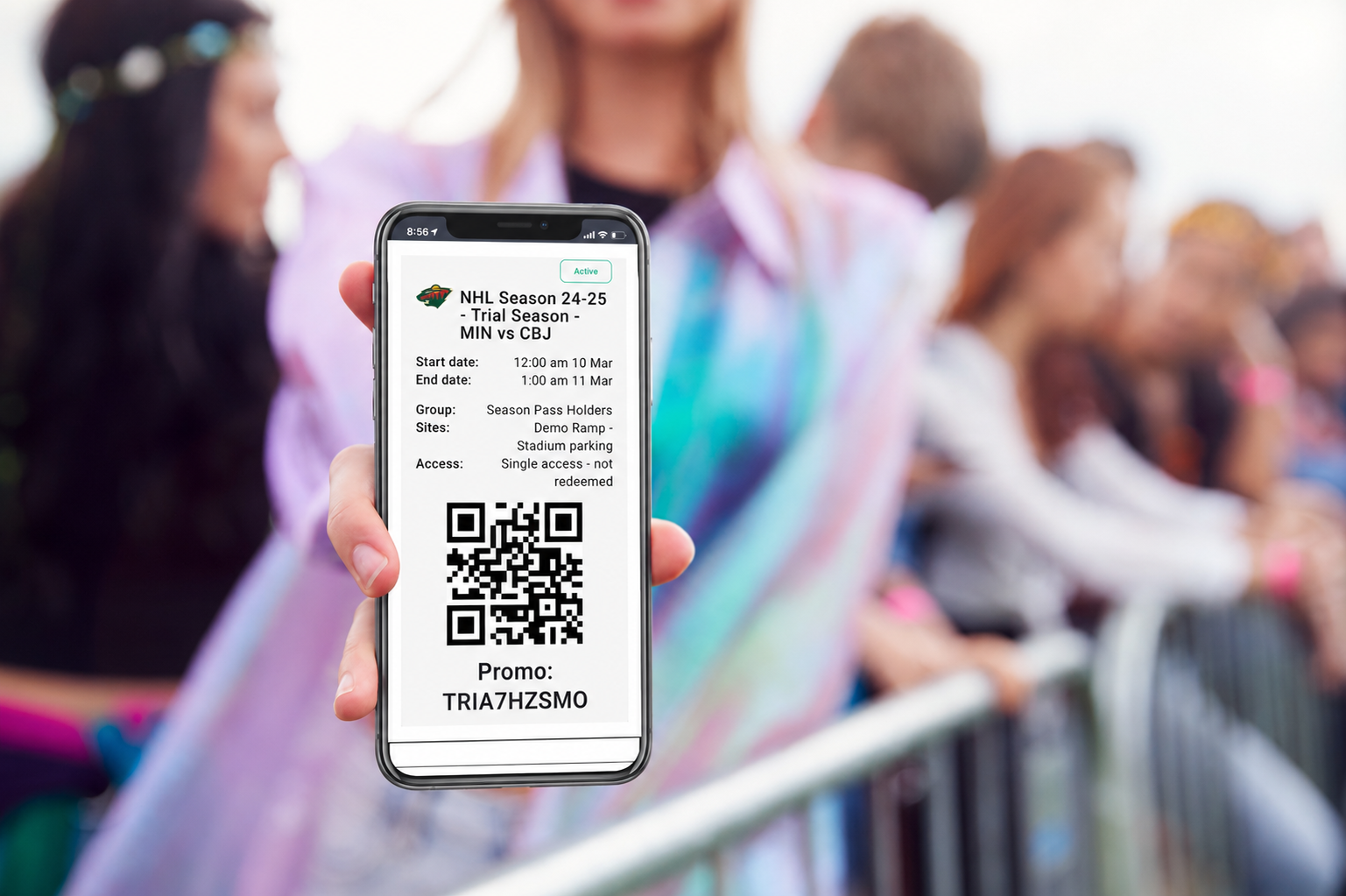
Event groups are set up in the management platform with their own times and days, supporting multi-rate parking sessions so a single event can price different periods, or different user groups, differently within the same event. Parkers pay through the white-labelled app or by scanning to pay, whichever suits them. Reservation and guest lists are managed either through a validation beacon or single-use promo codes generated inside the platform, so a list running into the hundreds doesn't need to be checked off by hand at the gate. Staff are sent an invitation to register their plates in the app ahead of time, so their access is sorted before event day arrives at all.
WHAT HAPPENS AT CHECK IN
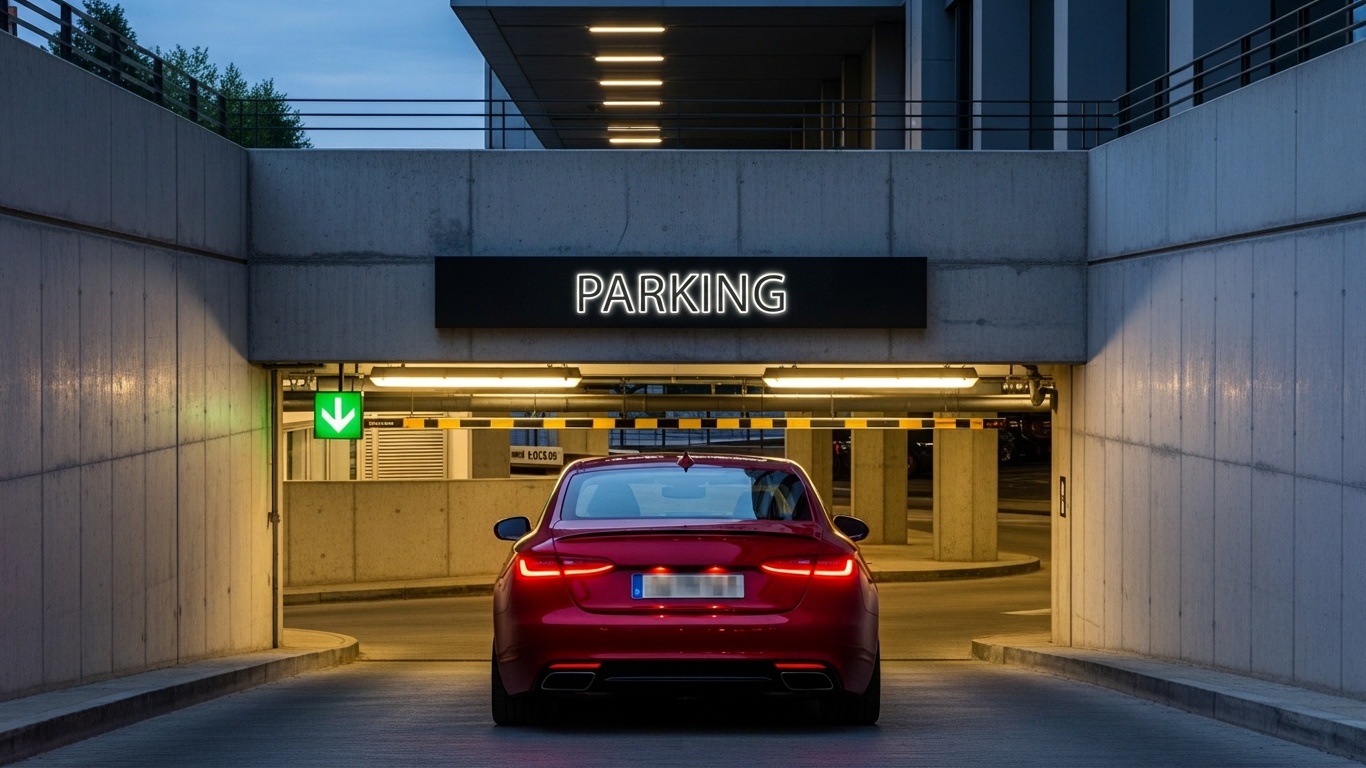
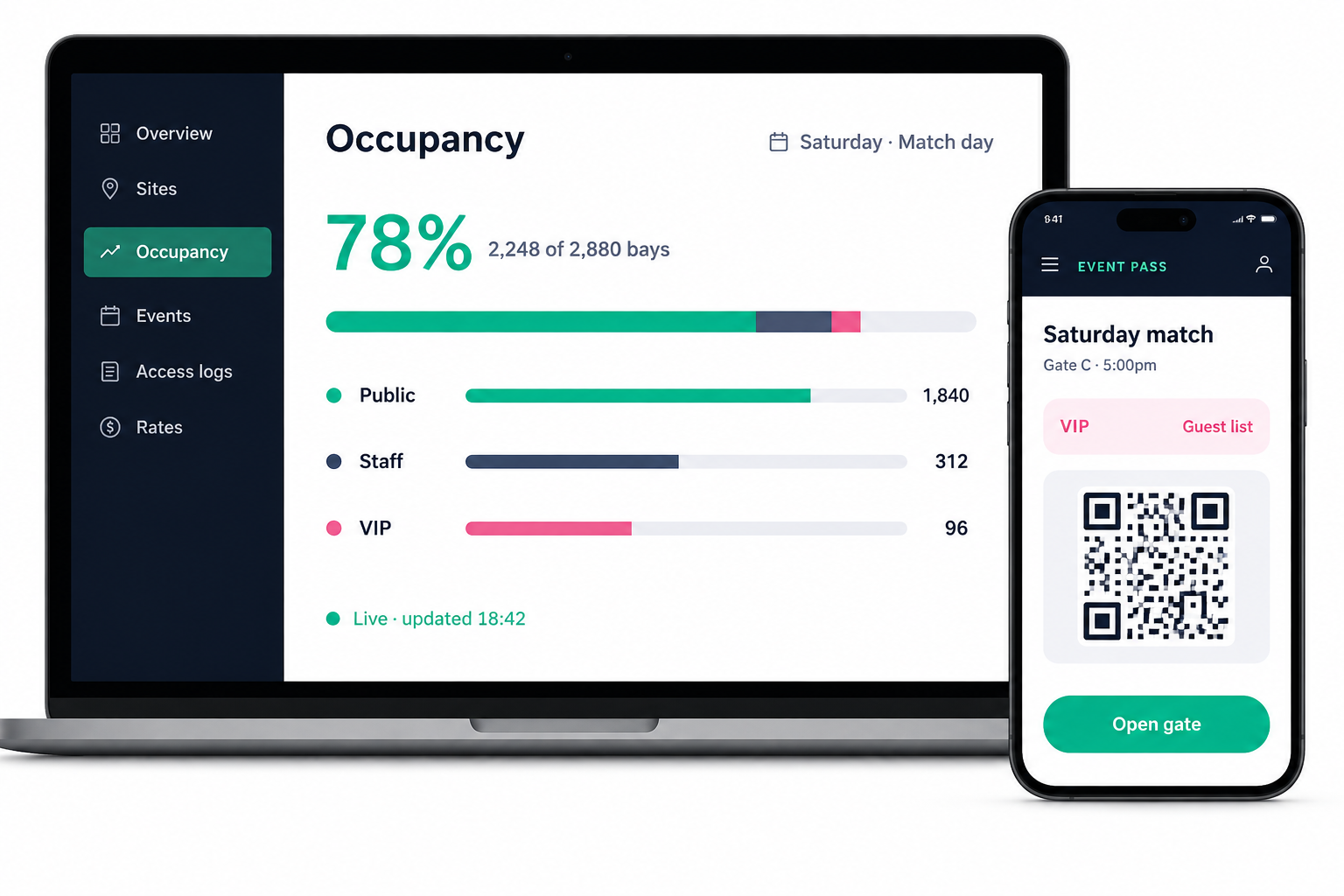
A customer's pass sits in the app, ready to show if it's needed. An attendant can use the mobile app to validate an event pass, or manually check a vehicle into a specific group (e.g. VIPs) Where LPR is deployed on site, it's simpler again — the plate is read automatically and access is granted without the customer doing anything at all. Whichever group someone belongs to, the same platform handles the check-in the same way.
WHERE IT FITS
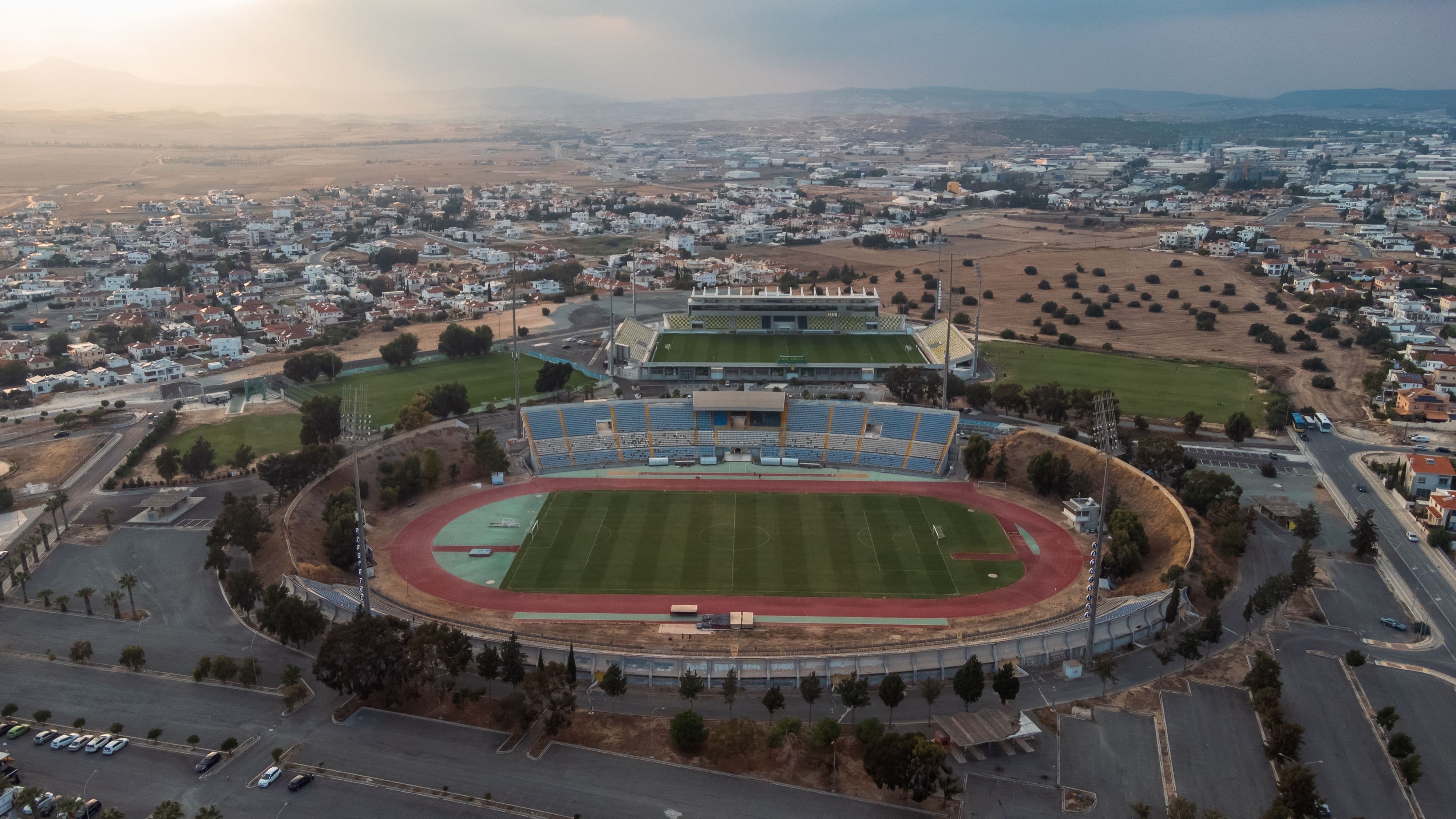
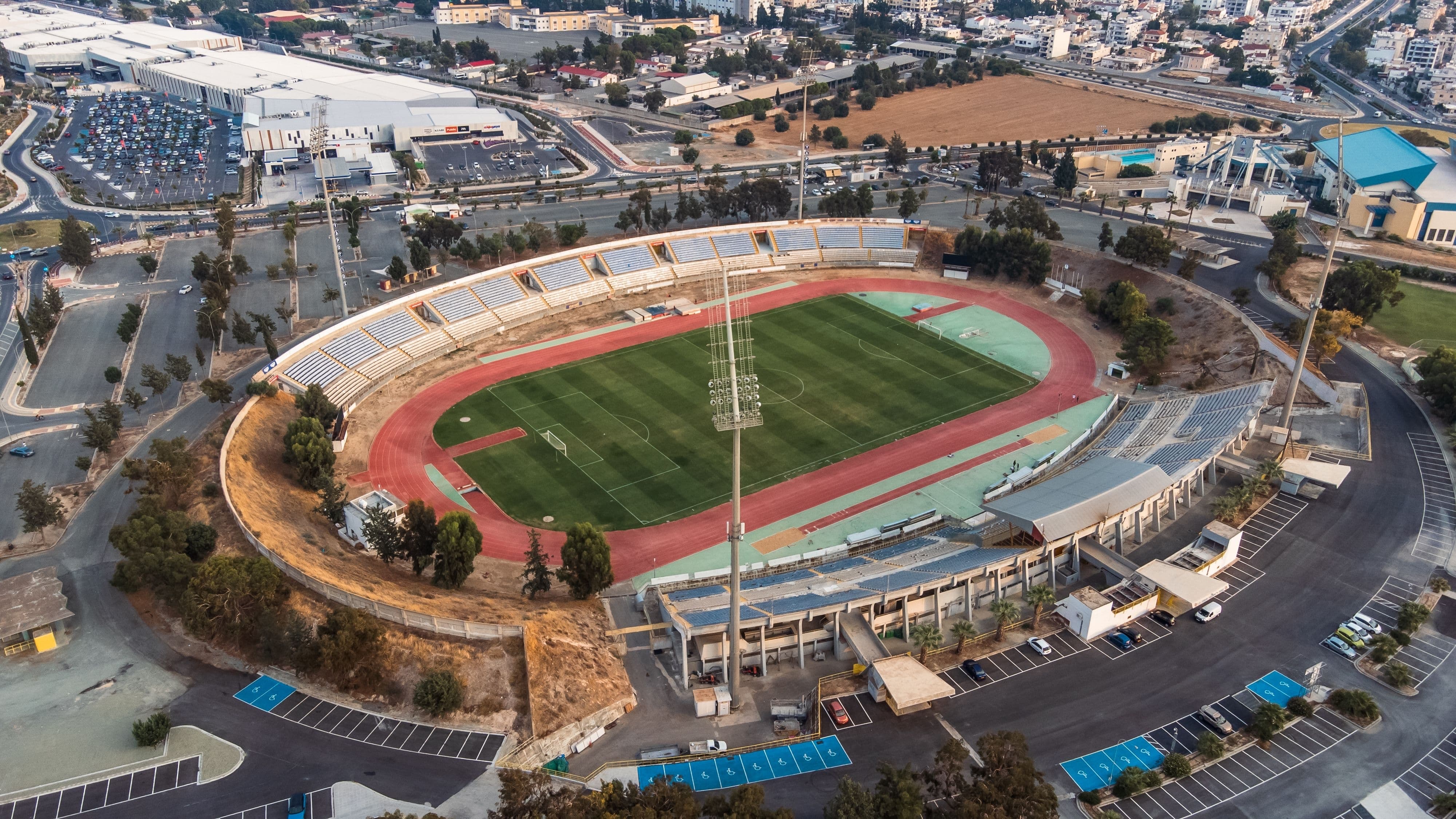
Sports stadiums across the NFL, NBA, and MLS, convention and conference centres, hotels with event spaces, and concert venues. What connects all of them is the same underlying problem — one site, potentially thousands of vehicles, arriving and leaving inside a narrow window, split across public attendees, staff, VIPs, and vendors, each needing a different set of rules applied correctly and automatically.
A concert venue might run public general admission alongside a small VIP allocation with different pricing and a separate entrance. A convention centre might be running several events across different halls on the same day, each with its own guest list. A stadium managing an entire season sets up one event series once, rather than rebuilding the access rules for every single home game.
THE REVENUE SIDE OF IT
Event passes can be issued as free allocations or sold as paid bookings within the same system, which means parking can be pre-sold alongside a ticket rather than handled as a separate transaction on the day. For a venue running events across multiple linked sites — a stadium precinct with several car parks, for instance — the same event setup applies across every linked site rather than needing separate configuration for each one.
WHAT THE OPERATOR CAN SEE
Occupancy is tracked per location and per space block in real time, with historic data available to download for analysis afterwards — useful for understanding how one event performed against another, or where capacity ran tight. Violations are flagged and can be investigated from the same platform, and customer emails and plates can be imported in bulk to build a whitelist rather than entered one at a time. Payments settle directly to the operator's merchant account, the same as any other Inugo transaction.
WHY ONE PLATFORM REALLY MAKES A DIFFERENCE
Event parking is one of the few situations where a system gets tested all at once — thousands of vehicles, a hard start time, and several different access rules running in parallel. Treating public parking, staff access, and VIP guest lists as separate systems is exactly how a bottleneck ends up forming outside the venue an hour before doors open. One platform, configured once per event or event series, is what keeps that from happening.