



WHERE THE HELP ACTUALLY LIVES
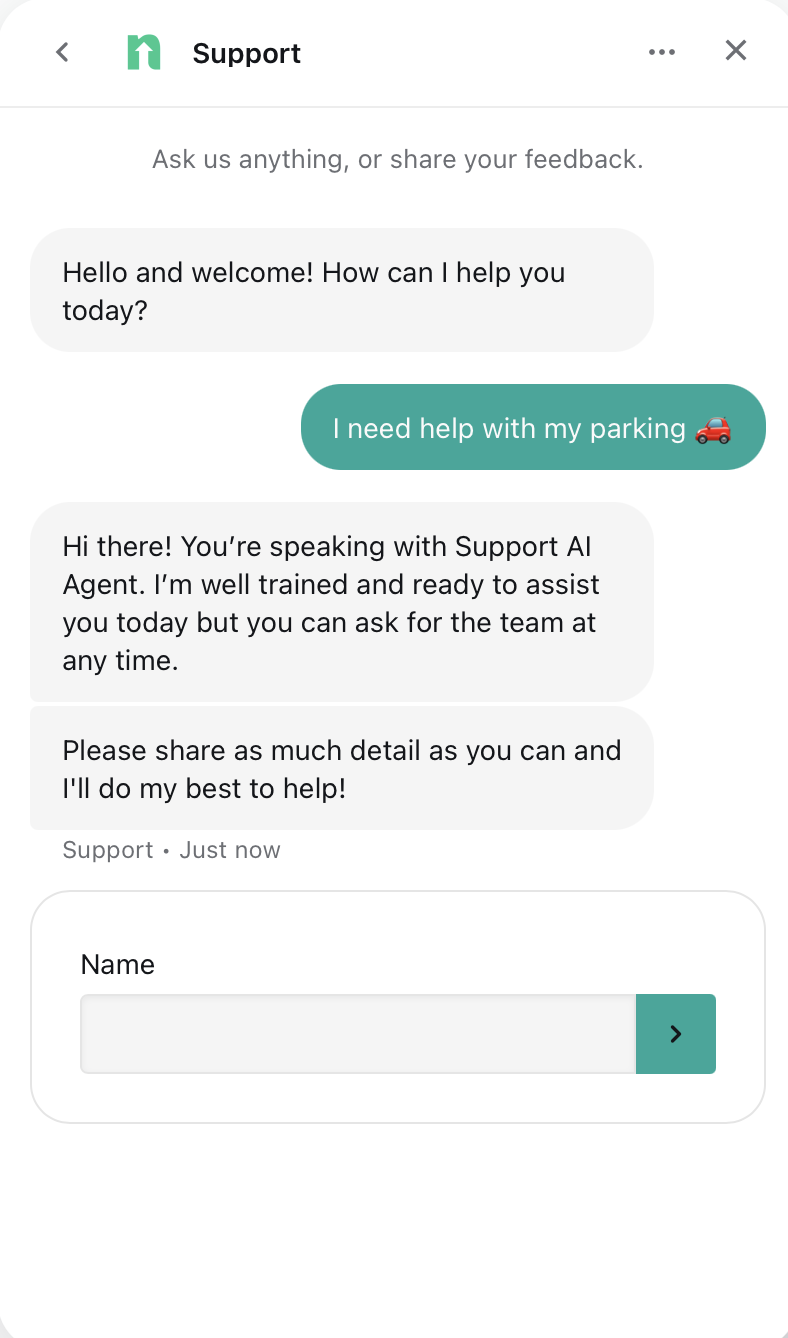
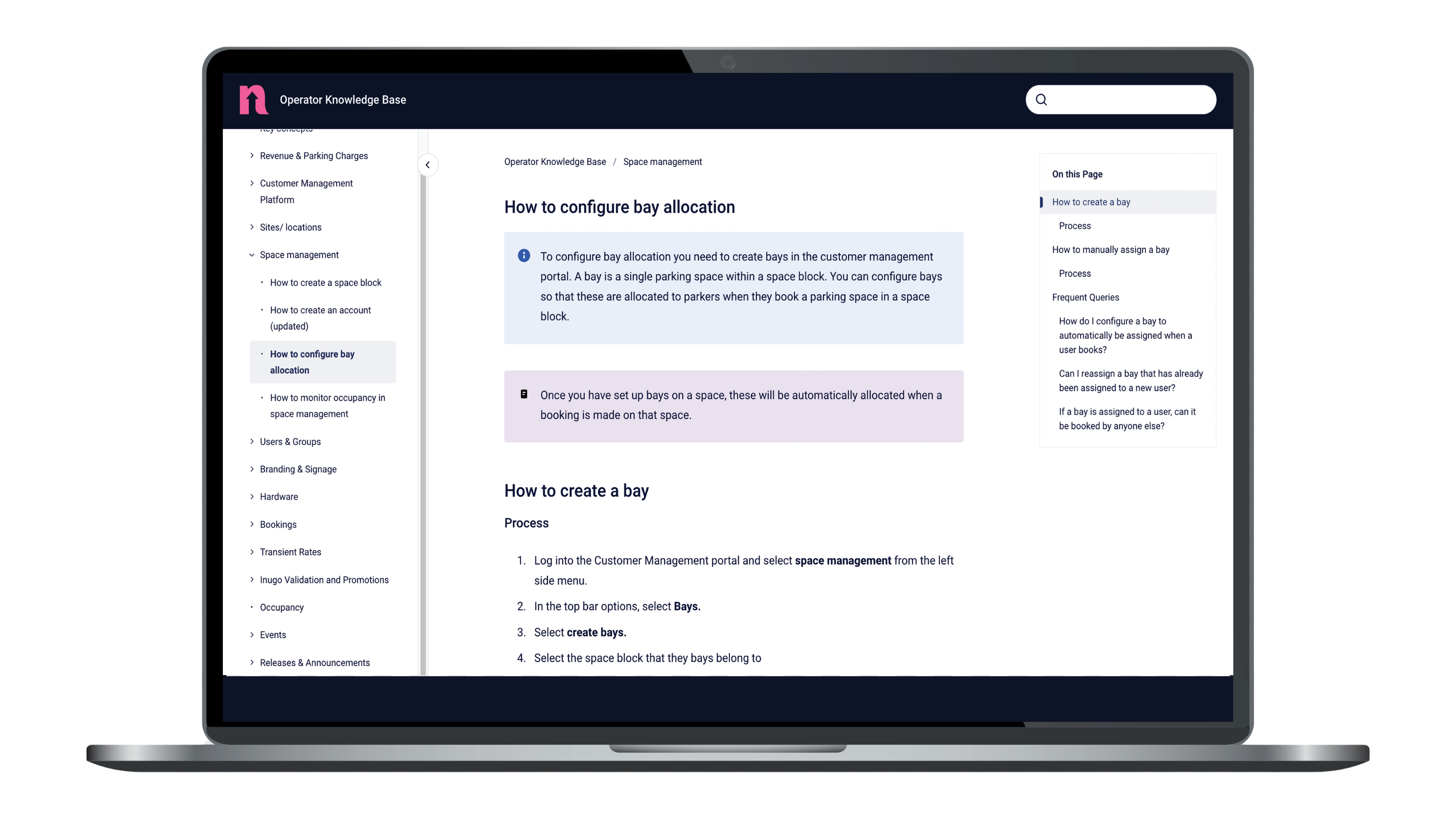
Rather than a separate manual or a support page someone has to go looking for, Inugo Help sits inside the console itself. Contextual tooltips surface relevant knowledge base articles for whatever page a user is actually looking at — the rates page surfaces rate-related help, the validation page surfaces validation help — so nobody has to describe their problem in a search bar before finding the answer. If the knowledge base genuinely doesn't cover it, a support ticket can be submitted from the same place, without having to switch to a separate system or start a fresh email.
WHO FEELS IT THE MOST
An operator with high staff turnover — a council with seasonal contractors, a university relying on student staff who change every semester — spends a disproportionate amount of support time re-explaining the same basic workflows to people who've just started. In-app, contextual help means a new starter can find the answer themselves on their first day, without needing a colleague to walk them through it or a support ticket logged for something that was never really a bug.
Smaller operators feel it differently. A small operator running one or two sites on Inugo typically doesn't have a dedicated account manager or customer success contact the way an enterprise client might — Inugo Help is often the first and fastest line of support they have, and for straightforward questions, the only one they need. On the other end of the scale, larger enterprise clients who prefer to handle first-line support with their own internal teams can use the same knowledge base to equip those teams, rather than routing every query back to Inugo.
WHAT CHANGES OPERATIONALLY
None of this replaces a person for the genuinely tricky cases — a billing dispute, a citation case in enforcement, something that needs judgement. What it does is filter out the high-volume, low-complexity questions that otherwise consume a disproportionate share of support time: what's today's rate, why didn't my validation apply, how do I extend my session. Fewer of those reaching a person means the people who do pick up the phone are dealing with things that actually need a human, and the person asking a simple question gets an answer immediately instead of waiting in a queue for one.
WHAT IT MEANS FOR A SUPPORT TICKET, WHEN ONE IS ACTUALLY NEEDED
When a question genuinely can't be answered by the knowledge base, a ticket can be raised directly from within the console — no switching to email, no starting from scratch. That's a better starting point than a blank message, and it keeps the support interaction in context with the work the user was already doing.
The next step — coming with the AI help console — takes this further. Tickets will carry full context of what the user was doing when they raised it: which page, which site, which action they were attempting. That's a meaningfully different starting point to an email that opens with "the system isn't working," and it cuts out the first round of back-and-forth that's usually just spent establishing what the problem even is. Over time, that's less inbound volume overall, and the volume that remains gets resolved faster because the CS team isn't starting from zero on every single case.
There's a knock-on benefit for the Customer Success team too: less time spent answering the same repeat questions means more time available for the accounts that actually need strategic attention, rather than every hour split evenly across routine tickets and the relationships that genuinely benefit from it.