


1. PRICING THAT DOESN'T MOVE WITH THE EVENT
Most venues set a flat rate and leave it. The same rate for a Tuesday afternoon as a Saturday night sellout.
That's a revenue decision, even if it doesn't feel like one. Event parking pricing should activate automatically when an event is scheduled - with the ability to set different rates for pre-bookings, casual arrivals, and different user groups. A flat rate treats a VIP pass holder and a casual visitor identically. It also means you're charging the same price for 40% occupancy as you are for 100%.
Event-specific rates, applied automatically within a defined event window, are one of the simplest ways to recover revenue that's currently left on the table.
2. ACCESS THAT TREATS EVERYONE THE SAME
A typical event venue has staff, contractors, VIPs, media, season pass holders, and general admission all arriving at the same time through the same gates.
When the system can't distinguish between them, someone has to. That means manual checks, gate staff making judgment calls, and queues building while one vehicle gets sorted out.
Access should be defined before the event - each group with its own rules, space allocation, and entry conditions. Plates pre-registered for staff and season holders are recognised automatically by LPR. VIP passes are validated without anyone needing to stop. General admission pays and moves through.
The gate only slows down when the system doesn't know who's who.

3. NO REAL TIME PICTURE OF WHAT'S HAPPENING
Most event parking operations are managed on feel. The lot looks busy. Someone radios in that Level 3 is full. A staff member at the entry hasn't had a break in three hours and is waving people through.
Without live occupancy data, there's no way to respond to what's actually happening. You can't redirect vehicles, adjust gate operation, or spot a zone filling up before it becomes a problem.
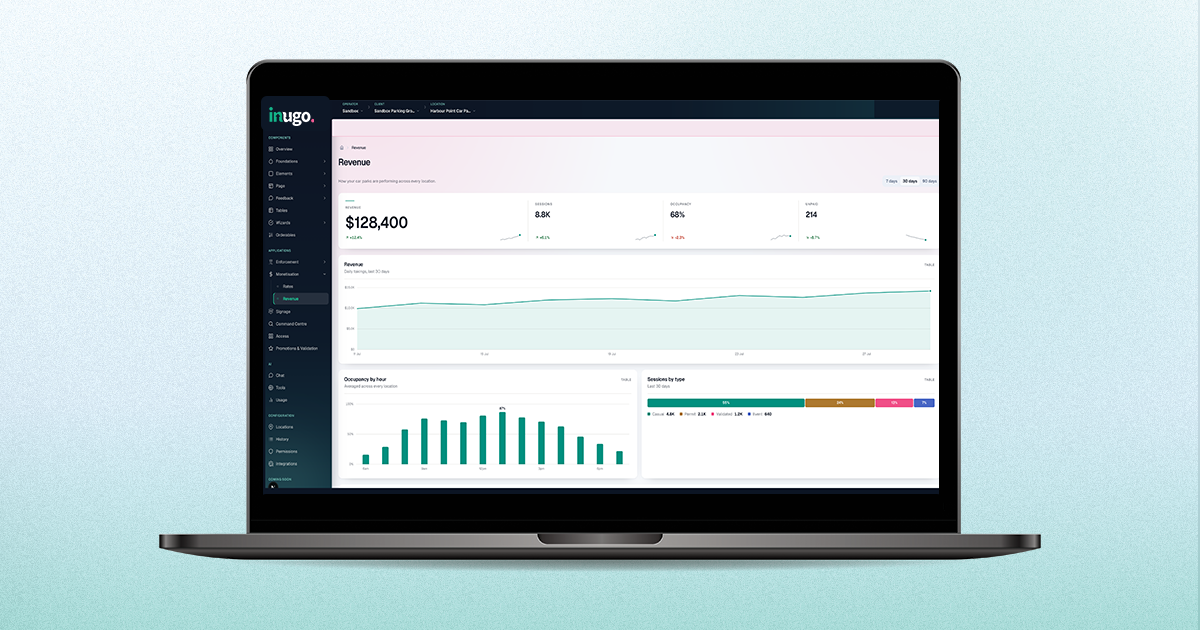
Real-time occupancy — tracked per space block as plates enter and exit — changes what event day management looks like. Operators can see exactly where available spaces are, across every zone, and make decisions from a dashboard rather than a radio call.
4. PAYMENTS THAT CREATE QUEUES
A single payment terminal at the exit. A queue of 200 cars. Everyone waiting while the person at the front can't find their ticket.
Tickets are the first problem. When the plate is the pass- scanned on entry, confirmed on exit - there's nothing to lose, nothing to forget, and nothing to hold up the line. Payment options available before the event (pre-booking), during it (scan-to-pay), and at exit (kiosk or app) mean the load is spread rather than concentrated at a single point.
A 40% reduction in congestion on busy game or event days isn't unusual when the payment flow is right.
5. STARTING FROM SCRATCH EVERY TIME
For venues running regular events or full seasons, rebuilding the setup for each event manually is a significant overhead — and an opportunity for configuration errors on the day.
An event series model means the setup is done once. Pricing rules, access groups, space allocations, and pass distribution are all configured at the series level. Individual events inherit those settings and can be adjusted where needed. Staff don't need to re-learn the system for every game or concert.
WHAT EVENT PARKING SHOULD LOOK LIKE
Event parking, done well, is largely invisible to the guest. They arrive, the gate opens, they park. Payment happened before they left home or takes 30 seconds on their phone. They leave without queuing.
For the operator, it means knowing exactly what's happening across every zone in real time, capturing revenue at the pricing level the demand justifies, and having the post-event data to refine the next one.
None of this requires a major infrastructure overhaul. It requires a platform that was built for events, not just adapted for them.