


WHERE THE EXTRA WORK ACTUALLY COMES FROM
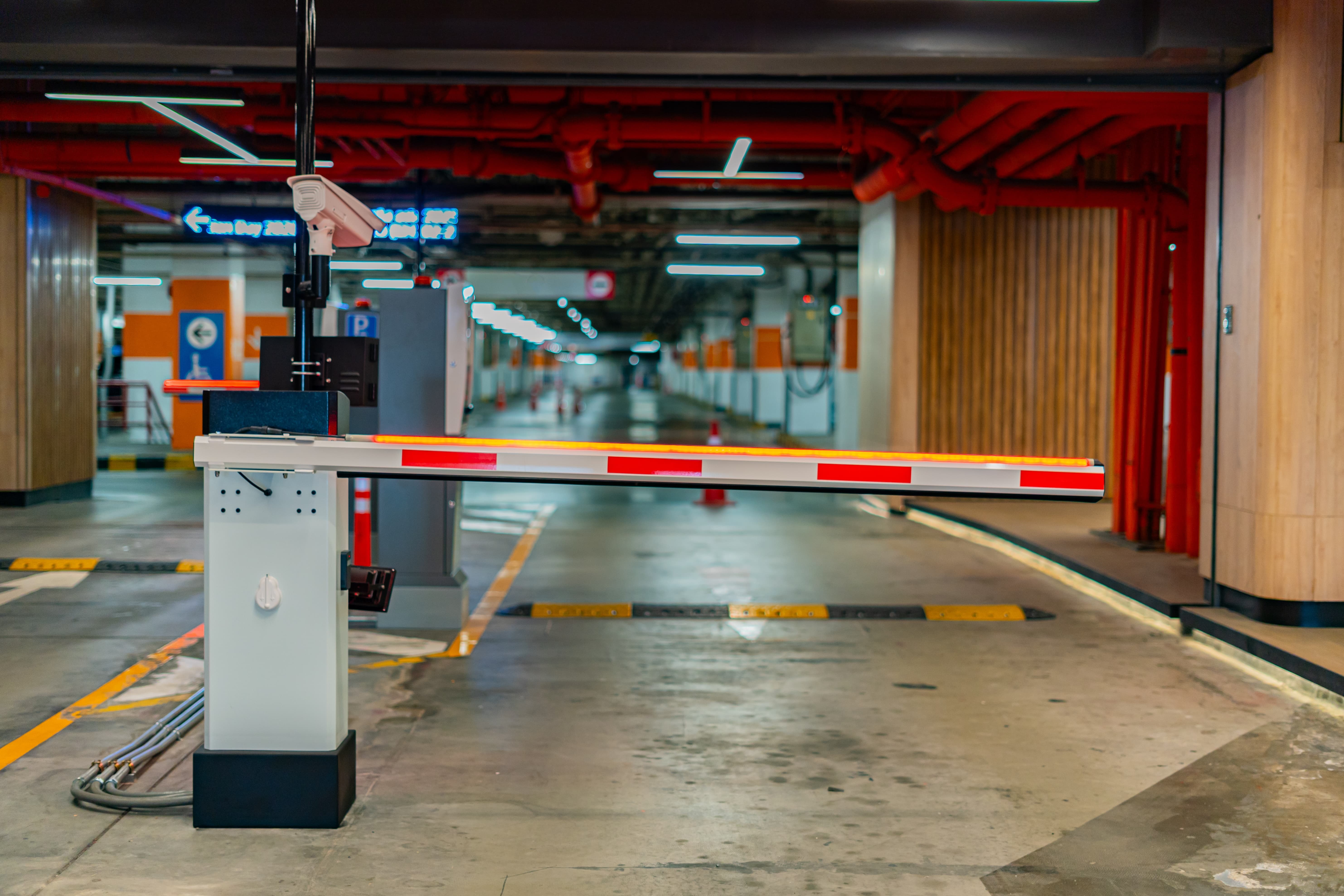
Ask most parking operators how many systems they run and the honest answer is rarely one. There's the barrier and cameras already on site, a PARCS platform that's been in place for years, maybe an enforcement tool or a reporting dashboard layered on top. Each one does its job well enough on its own. None of them were built to talk to each other, so the job of making them agree falls to a person — checking one dashboard against another, confirming a payment landed correctly, cross-referencing an access event against what the camera actually recorded.
It's easy to stop noticing this as a problem, because it becomes background work. But it's still work. Every manual reconciliation is time that isn't going toward the site itself, and every mismatch between systems is a small risk that something gets missed.
WHY REPLACING IT ALL ISN'T THE ANSWER
The instinct when systems don't talk to each other is to consider ripping them out and starting again. For most operators, that's the wrong call. The barrier at the entrance works. The cameras are already installed and calibrated. The PARCS platform, whatever its limitations, has years of data and staff familiarity behind it. Replacing all of it to fix a data-sharing problem is an expensive way to solve something that doesn't actually require new hardware — it requires the hardware that's already there to start communicating.
There's also a vendor question underneath this. Whatever camera system or PARCS platform an operator has chosen, they shouldn't have to give it up just to get everything working together. Being locked into a single vendor's ecosystem to get integration is its own kind of cost — and it cuts the other way too, since it means being locked in even when Inugo's own hardware and software are the better fit for a given site.
WHAT INTEGRATION ACTUALLY DOES
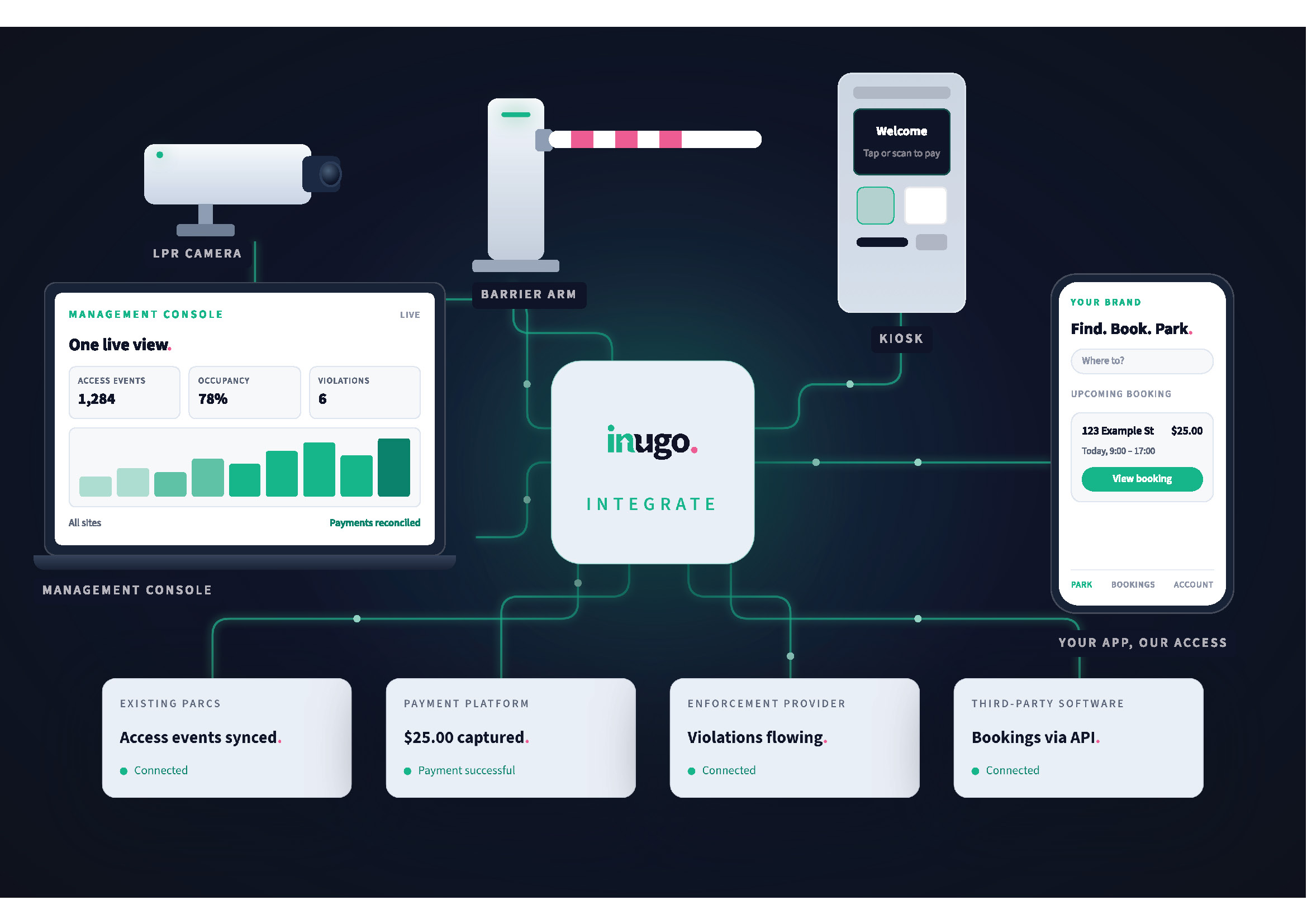
Inugo Integrate is built on the principle of working with what an operator already has. Existing PARCS equipment, cameras, gates, and barriers connect in through APIs, SDKs, or a drag-and-drop integration builder that lets custom integrations be created from an existing set of events — rather than being replaced to fit a new system.
Pre-built integrations already exist across a network of hardware and software partners, including Milesight, Windcave, Pave Mobility, Parkonect, T2 Systems, and others, so many operators are connecting equipment they already know rather than starting from a blank slate. For anything outside that pre-built list, the same framework extends to custom, site-specific connections.
Once connected, data moves between systems in real time — access events, payments, violations, and occupancy — instead of staying locked inside whichever system captured it first. That unifies with the features already built around it: access and LPR, reporting and analytics, and enforcement all draw on the same connected data, and everything surfaces in the Inugo Management Console as a single, live view.
WHAT CHANGES OPERATIONALLY
The immediate change is time back — less of it spent bridging systems by hand, more of it spent on the site itself. The less obvious change is confidence in the data. When hardware and software that used to operate in isolation start sharing what they see, an operator isn't just saving reconciliation time, they're removing the small, ongoing risk that comes from multiple systems telling slightly different stories about the same site.
That matters more as an operation grows. A single site can usually absorb a bit of manual bridging between systems. A portfolio of sites can't — the same small gap multiplied across every location becomes a real operational cost, and it's exactly where Integrate is designed to make the biggest difference.
GETTING STARTED
Inugo Integrate isn't a replacement for the hardware or platforms an operator already has — it's the layer that lets all of it work together, without a costly rebuild and without being tied to a single vendor.